
Cargo Pants
Cargo Pants 101: Why This Utility Staple Refuses to Go Out of Style
If you gave up on cargo pants somewhere around 2008, it might be time to reconsider. The category has quietly rebuilt itself from novelty trend into genuine wardrobe workhorse, and the version dominating racks today looks almost nothing like the baggy, low-slung pairs that gave the style a rough reputation in the first place. This is a fresh look at what cargo pants actually are now — the fabrics, the fits, and the rules that separate a well-worn pair from a fashion misstep.
Where the Pockets Actually Came From
Cargo pants started as pure equipment. British military designers introduced the style in the 1930s, adding oversized patch pockets to trousers so soldiers could carry maps, ammunition, and tools without extra gear. The design spread through American forces during World War II and stayed almost entirely functional for decades. It wasn't until skate and hip-hop culture adopted the silhouette in the 1990s that cargo pants crossed into everyday fashion, eventually landing — for better or worse — in nearly every mall storefront by the early 2000s.
What's different this time around is intention. Rather than treating the utility pocket as a costume piece, today's cargo pants are being designed with actual tailoring in mind, which is exactly why they've earned a spot back in serious wardrobes rather than just festival outfits.
Fabric Matters More Than People Think
The fabric determines almost everything about how a pair of cargo pants performs and ages. A quick breakdown:
Ripstop nylon — Woven with a reinforced grid pattern that stops small snags from turning into tears. Lightweight and quick-drying, making it a strong choice for travel or humid climates, though it reads slightly more "technical" than dressy.
Cotton twill — The most balanced option, with enough structure to hold pocket shape while staying breathable and soft enough for all-day comfort.
Heavyweight canvas — Extremely durable and abrasion-resistant, ideal for anyone who's rough on clothing, though it takes longer to break in and drapes less naturally.
Recycled or blended technical fabrics — An increasingly common option as brands respond to demand for more sustainable materials without sacrificing durability.
Finding a Fit That Actually Works
Fit is where most cargo pants outfits succeed or fail, and there's more variety available now than there has been in years.
Straight-leg — The most forgiving cut across body types, and the easiest to dress up or down.
Wide-leg and parachute styles — Currently the most visible trend, often featuring drawstring hems or cinched ankles to control the volume.
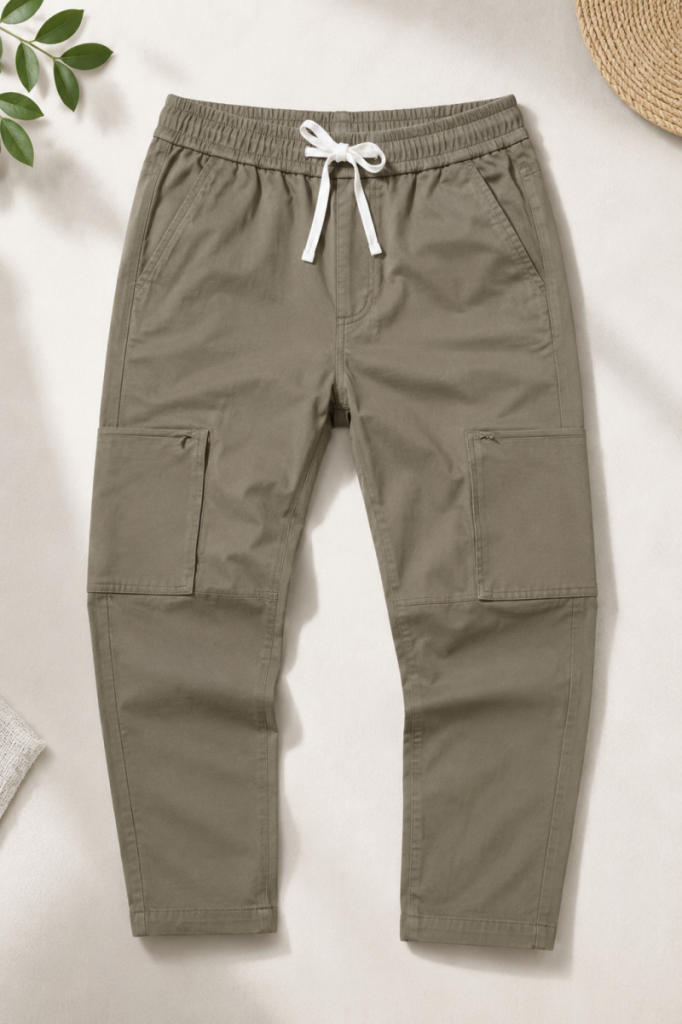
Tapered or slim cargo pants — A hybrid cut that keeps the utility detailing while narrowing through the leg, popular for anyone who wants the aesthetic without the extra fabric.
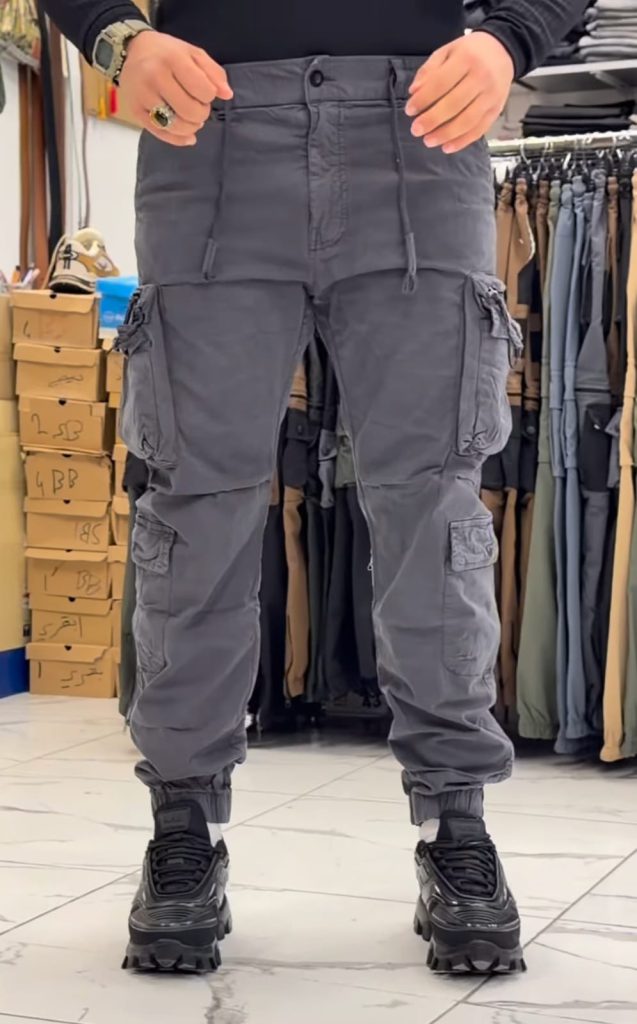
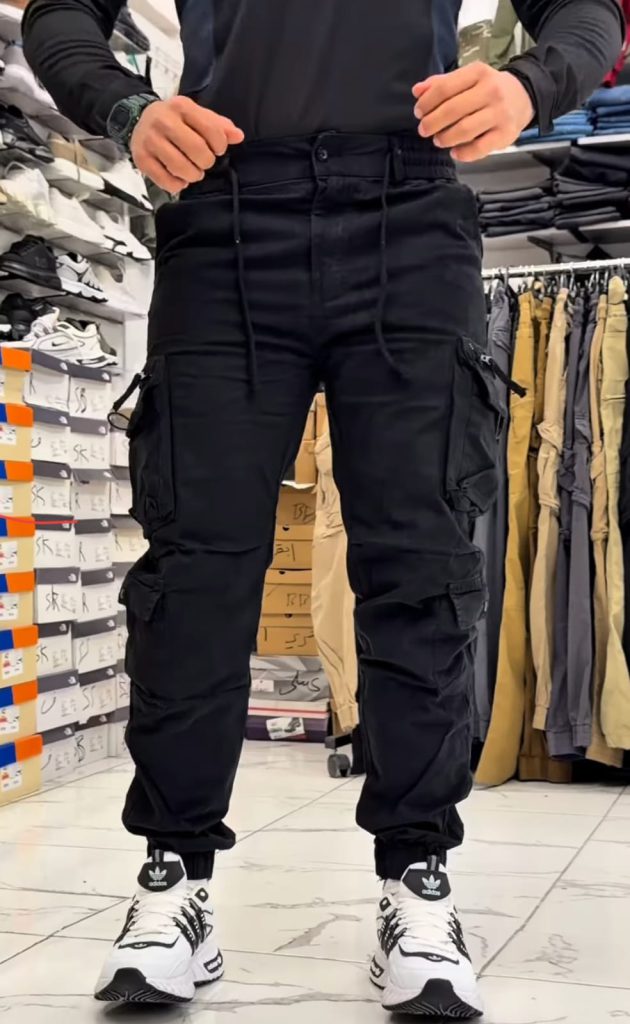
Cargo joggers — An athleisure crossover with an elastic waistband, blurring the line between loungewear and street style.
Low-rise cargo pants — A callback to early-2000s styling, now worn more deliberately and usually paired with cropped tops for proportion.
Styling Cargo Pants Season to Season
Cargo pants aren't a one-climate garment, provided the fabric weight changes with the temperature.
Warmer Months
Lightweight ripstop or twill cargos work well with simple tanks, breathable sneakers, and minimal layering. Lighter colors — sand, olive, off-white — tend to feel more seasonally appropriate than heavier tactical tones.
Cooler Months
Canvas or heavier twill cargos hold up well under layers. A fitted base layer, a structured jacket, and boots keep the silhouette balanced despite the extra bulk of both the pants and outerwear.
The Trends Actually Worth Paying Attention To
Cargo pants have splintered into several distinct directions rather than staying a single look:
Denim-cargo hybrids — Traditional five-pocket jeans reworked with added utility pockets, blending two wardrobe staples into one.
Tonal, monochrome cargo outfits — Head-to-toe single-color styling that treats the cargo pant as part of a cohesive silhouette rather than a standalone statement.
Cropped and ankle-length cargos — A shorter hem meant to be worn with visible socks or chunky footwear.
Cargo skirts — The pocket detailing applied to skirt silhouettes, extending the trend well past traditional trousers.
Muted, tactical color palettes — Khaki, olive, and slate continuing to outperform brighter colorways in the category.
Keeping Cargo Pants in Good Shape
A few maintenance habits go a long way given how much hardware and stitching is involved:
Empty and turn out pockets before washing to avoid strain on the seams.
Wash in cold water to protect color, particularly on canvas and twill fabrics.
Skip the dryer when possible — high heat breaks down ripstop's tear-resistant weave faster than air drying.
Address loose pocket stitching immediately rather than waiting for a full tear.
Store folded rather than hung to avoid stretching heavier fabrics at the waistband.
Quick Rules for Wearing Cargo Pants Well
Let one half of the outfit stay fitted if the other is loose — never volume on volume.
Choose fabric weight based on season first, aesthetic second.
Keep pockets functional rather than overstuffed; shape matters more than storage.
A clean sneaker or boot does more to modernize the look than any other single piece.
Treat cargo pants as a foundation, not a statement — let one other element of the outfit stand out, not both.
Cargo pants have moved well past their early-2000s reputation, landing somewhere much more permanent: a genuinely practical, well-designed staple that's earned its place back in rotation.